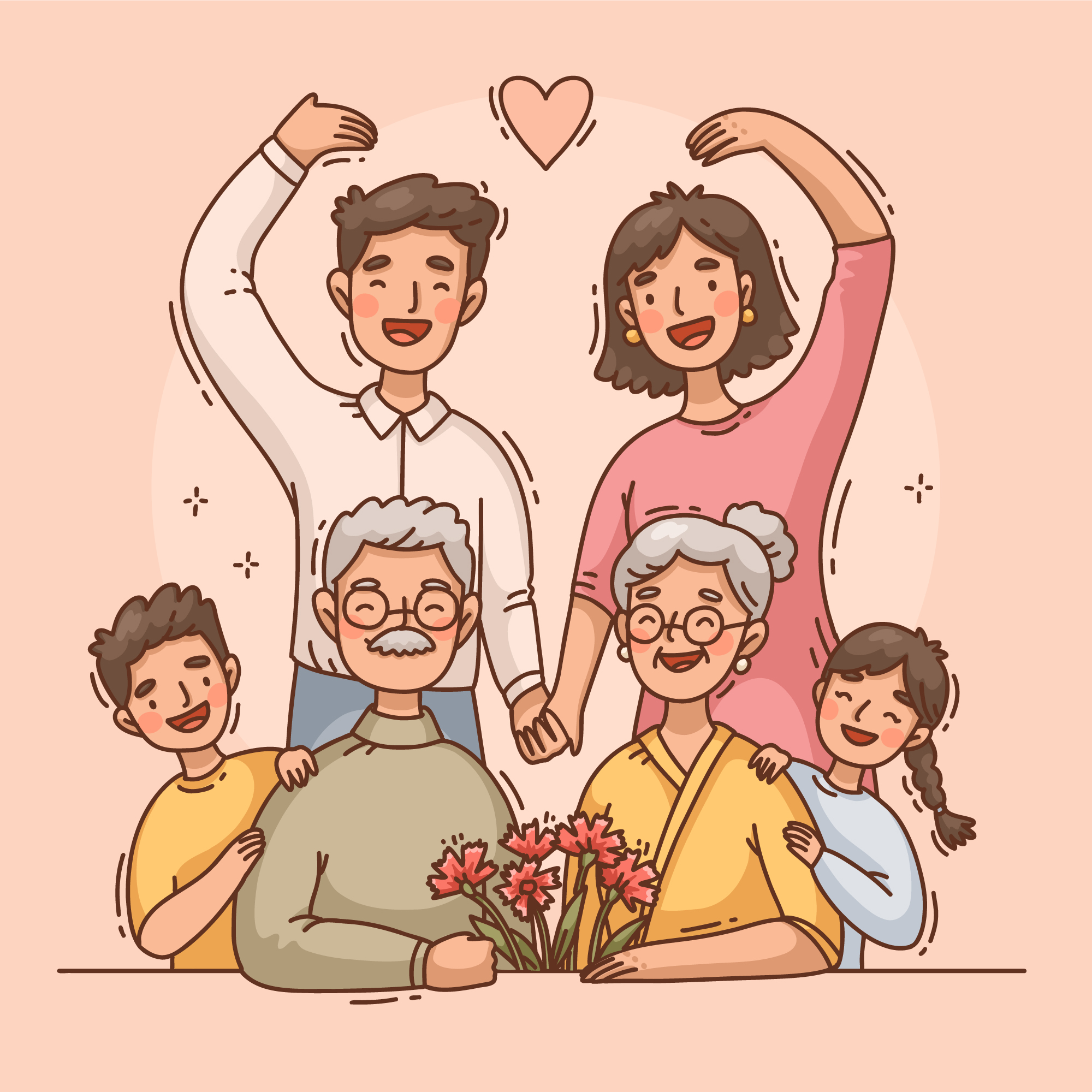
आइए जर्मन में परिवार और पारिवारिक सदस्योंके नामों के बारे में जानें। जर्मन में परिवार को ‘फ़ैमिली‘ ( Familie) या ‘दी फ़ैमिली‘ (Die Familie) कहा जाता है। जर्मन में परिवार के सदस्यों के अलग-अलग नाम होते हैं। हमारे परिवार में माताजी, पिताजी, भैया, दीदी, चाचा,चाची, दादा, और दादी जैसे विविध सम्बोधन प्रचलित है। इसी तरह जर्मन भाषा में पारिवारिक सदस्योंके लिए अलग अलग सम्बोधन है|
जर्मन में माता और पिता के लिए शब्द ‘मुट्टर‘ और ‘फाटर‘ हैं। बहन को ‘श्वेस्टर’ और भाई को ‘ब्रूडर’ कहा जाता है। एक लड़के (Boy) को ‘युंग’ (युंग-अ), बेटे ( Son) को ‘जॉन्न’, एक लड़की (Girl) को ‘मेडशेन’ और बेटी ( Daughter) को ‘टॉख्टर’ कहा जाता है।। दादी को ‘ग्रोसमुट्टर‘ या ‘ओमा’ कहा जाता है, और दादाजी को ‘ग्रोसफाटर‘ या ‘ओपा’ कहा जाता है। जर्मन में माता-पिता को ‘एल्टर्न’ और दादा-दादी/नाना-नानी को ‘ग्रोसएल्टर्न’ कहा जाता है ! एक बच्चे को ‘बेबी’ और एक छोटे लड़के या लड़की को ‘किण्ड’ कहा जाता है। ‘किण्ड’ का बहुवचन रूप ‘किंडर’ है जिसका अर्थ है अनेक बच्चे।
जर्मन में लोग अपने रिश्तेदारों ‘‘फेरवाण्डट’(-अ)‘ कहकर बुलाते हैं। मासी, चाची और बुवा सभी को अंग्रेजी में ‘आंटी’ की तरह एक ही शब्द में ‘टाण्ट’ (टाण्ट-अ)‘ सम्बोधित किया जाता है। चाचा और मामा दोनों को ‘ओंकेल’ कहा जाता है। सास के लिए ‘श्विगरमुट्टर‘ और ससुर के लिए ‘श्विगरफाटर‘ शब्द हैं। ‘श्वेगेरिन’ का अर्थ है नानंद और ‘श्वागर‘ का अर्थ है देवर । भतीजों को ‘नेफ्फ‘ और भतीजियों को ‘निष्ट’ कहा जाता है। मित्र को ‘फ्रॉईन्ड‘ और सहेली को ‘फ्रॉइंडीन‘ कहा जाता है।
इन शब्दों में हम स्त्रीवाचक शब्दों से पहले ‘दी’ का प्रयोग करते हैं जैसे ‘मुट्टर, ग्रोसमूट्टर , श्वेस्टर‘। और पुरुषवाचक शब्दोंके के लिए ‘देअर’ का प्रयोग होता है जैसे ‘फाटर, ब्रूडर, जॉन्न ‘। जैसे ‘दी मुट्टर’ या ‘देअर फाटर’। लेकिन मैडशेन, बेबी और किण्ड जैसे नामों के पहले ‘दास’ लगता है। इसलिए हम कहते हैं ‘दास मैडशेन’, ‘दास बेबी’ और ‘दास किण्ड’।
उपरोक्त जानकारी पढ़ने के बाद क्या आप मुझे जर्मन में बता सकते हैं कि आपके परिवार में कौन कौन है?
English
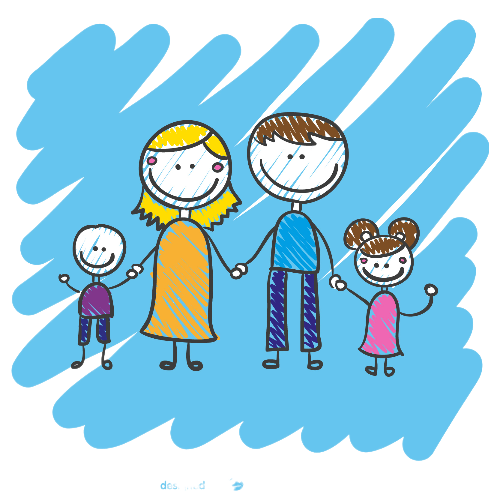
Let’s have a look at ‘Family’ and ‘Family members’ in German in this post. In German, family is referred to as ‘Familie’ or ‘die Familie’. Like Mother, Father, Sister, Brother, Aunt, Grandfather, and Grandmother in English, family members are also addressed differently in German.
‘Mutter’ and ‘Vater’ are the German words for mother and father, respectively. Son is called ‘Sohn’ and daughter is called ‘Tochter’, whereas sister and brother are referred to as ‘Schwester’ and ‘Bruder’. ‘Junge’ is the name of the boy, and ‘Mädchen’ is the name of the girl. Grandmother is referred to as ‘Großmutter’ or ‘Oma’, whereas grandfather is referred to as ‘Großvater’ or ‘Opa’. In German, parents are referred to as ‘Eltern’, and grandparents as ‘Großeltern’! A child is referred to as ‘Kind’ and children are ‘die Kinder’, while a baby is simply referred to as ‘Baby’.
‘Verwandte’ is the German word for relatives. Uncle is referred to as ‘Onkel’, while aunt is called ‘Tante’. The in-laws are referred to as ‘Schwiegermutter’ that is mother-in-law and ‘Schweigervater’ which is father-in-law. In German, ‘Schwägerin’ refers to a sister-in-law and ‘Schwagar’ to a brother-in-law. Nephew is called ‘Neffe’, whereas niece is called ‘Nichte’. Here, we must remember how we treat our friends just as we do our family. A male buddy is referred to as ‘Freund’, and a female friend as ‘Freundine’.
All feminine nouns, such as Mutter, Großmutter, and Schwester, are pronounced with ‘die’ preceding them like ‘die Mutter’, while masculine words are pronounced with ‘der’ like ‘der Vater’, ‘der Großvater’. But Mädchen, Baby and Kind are pronounced as ‘das Mädchen’, ‘das Baby’ and ‘das Kind’.
After learning this would you tell me about your family members in German? You surely can!
Stay tuned for more interesting posts!
© 2023 Germanplanet.in (by Sayalee Marathe )
Image Credit- Freepik.com
(https://www.howtopronounce.com- pronunciation dictionary of German words)

Comments
One response to “ऑनलाईन जर्मन: जर्मन भाषा में ‘परिवार’और ‘पारिवारिक सदस्य’!”
This was a very needed article mam.
Its crisp and easy for understanding.
I daily refer to your articles and these have proven of great help in my 9th std daughters German language careicula.
Many thanks 🙏